

Home / Journeys / Nepal / Everest Base Camp
Everest region · 15 days
Everest Base Camp Trek
Fifteen days from Kathmandu to the foot of the world's highest mountain, through the valley our founders call home, with sunrise on Kala Patthar.
What to expect
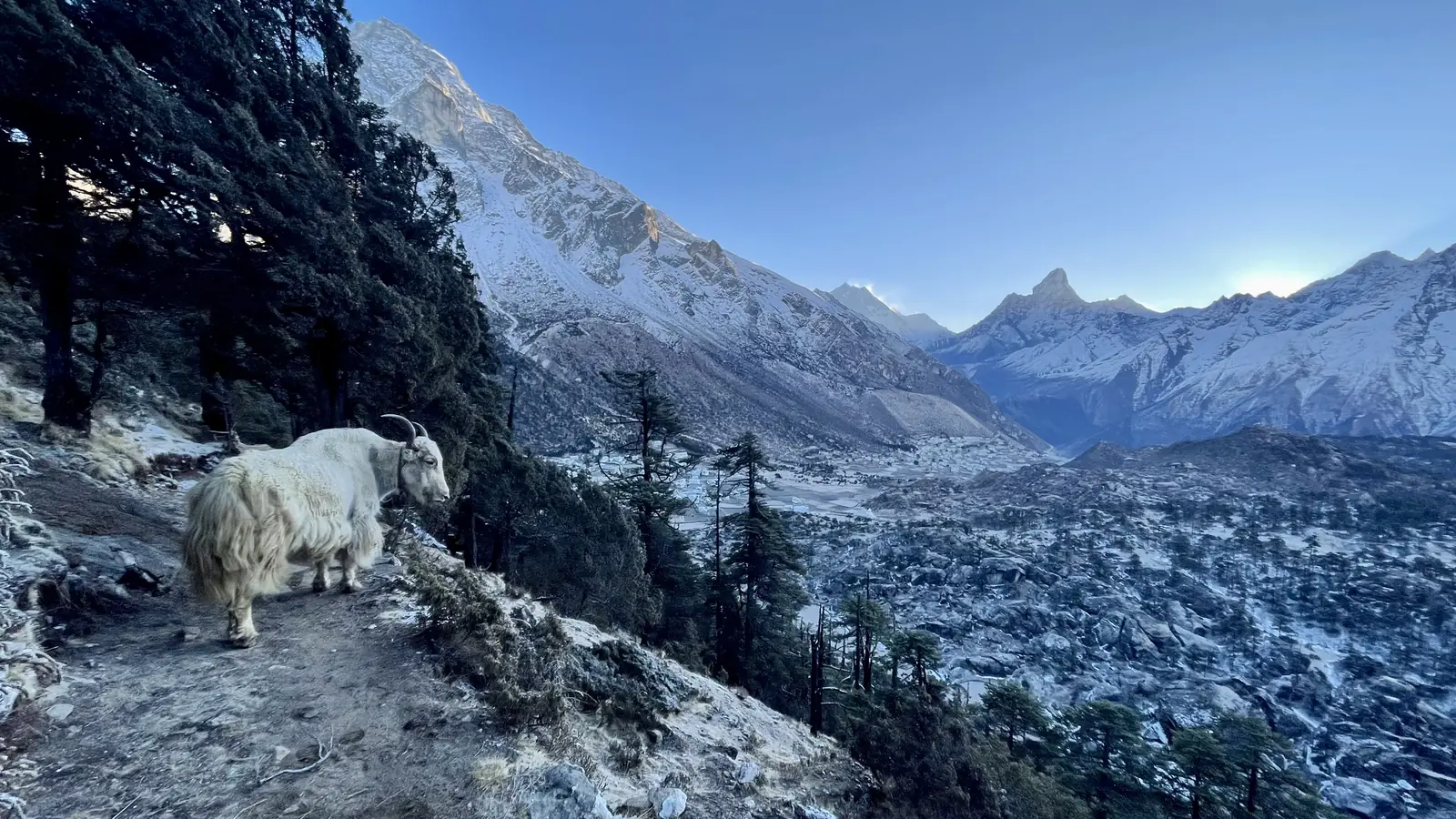
The trek to Everest Base Camp follows the Dudh Koshi and Imja valleys through the Khumbu, the Sherpa homeland and the valley our founders come from. You sleep in family-run teahouses, walk past monasteries and mani walls that have stood for generations, and climb slowly to the foot of Chomolungma, as Everest is called in Tibetan (Sagarmatha in Nepali).
Our plan includes two acclimatization days, at Namche and Dingboche, and a sunrise climb of Kala Patthar. From base camp itself, the summit of Everest is hidden behind its neighbors; Kala Patthar is where you see it best.
- Namche Bazaar
- Khumjung & the Hillary school
- Tengboche Monastery
- Pangboche
- Thukla memorials
- Everest Base Camp
- Kala Patthar sunrise
Altitude, day by day
The line shows where you sleep each night. Arrows mark the high point of a day's walk, when it's higher than that night's bed.
Day-by-day itinerary
A typical plan. We adjust the pace, add rest days or combine routes to suit your group, and send you a full itinerary with your quote.
- Day1
Arrive in Kathmandu
We meet you at the airport with a khata, the white scarf of welcome, and take you to your hotel. A relaxed evening and a first briefing over dinner.
- Day2
Kathmandu: permits, gear and Boudhanath
Meet your guide, check your gear and finish the permits. There's time to visit Boudhanath stupa, the heart of Kathmandu's Tibetan and Sherpa community.
- Day3
Fly to Lukla, walk to Phakding
An early flight to Lukla's mountainside airstrip. In spring and autumn, Lukla flights usually leave from Manthali (Ramechhap), a pre-dawn drive from Kathmandu. Then a gentle first walk down along the Dudh Koshi.
- Day4
Phakding to Namche Bazaar
Into Sagarmatha National Park, across the high suspension bridges, and a long climb to Namche, the trading town of the Khumbu. On a clear day, your first glimpse of Everest.
- Day5
Acclimatization day in Namche
Climb high, sleep low: a walk up to Khumjung, home of the school Sir Edmund Hillary built with the Sherpa community, with views of Everest, Lhotse and Ama Dablam. Afternoon free for Namche's bakeries and the Sherpa Culture Museum.
- Day6
Namche to Tengboche
A balcony trail with Ama Dablam ahead, down to the river at Phunki Tenga and up through forest to Tengboche Monastery, the spiritual heart of the Khumbu. If the monks are at prayer in the afternoon, you may be able to sit quietly at the back.
- Day7
Tengboche to Dingboche
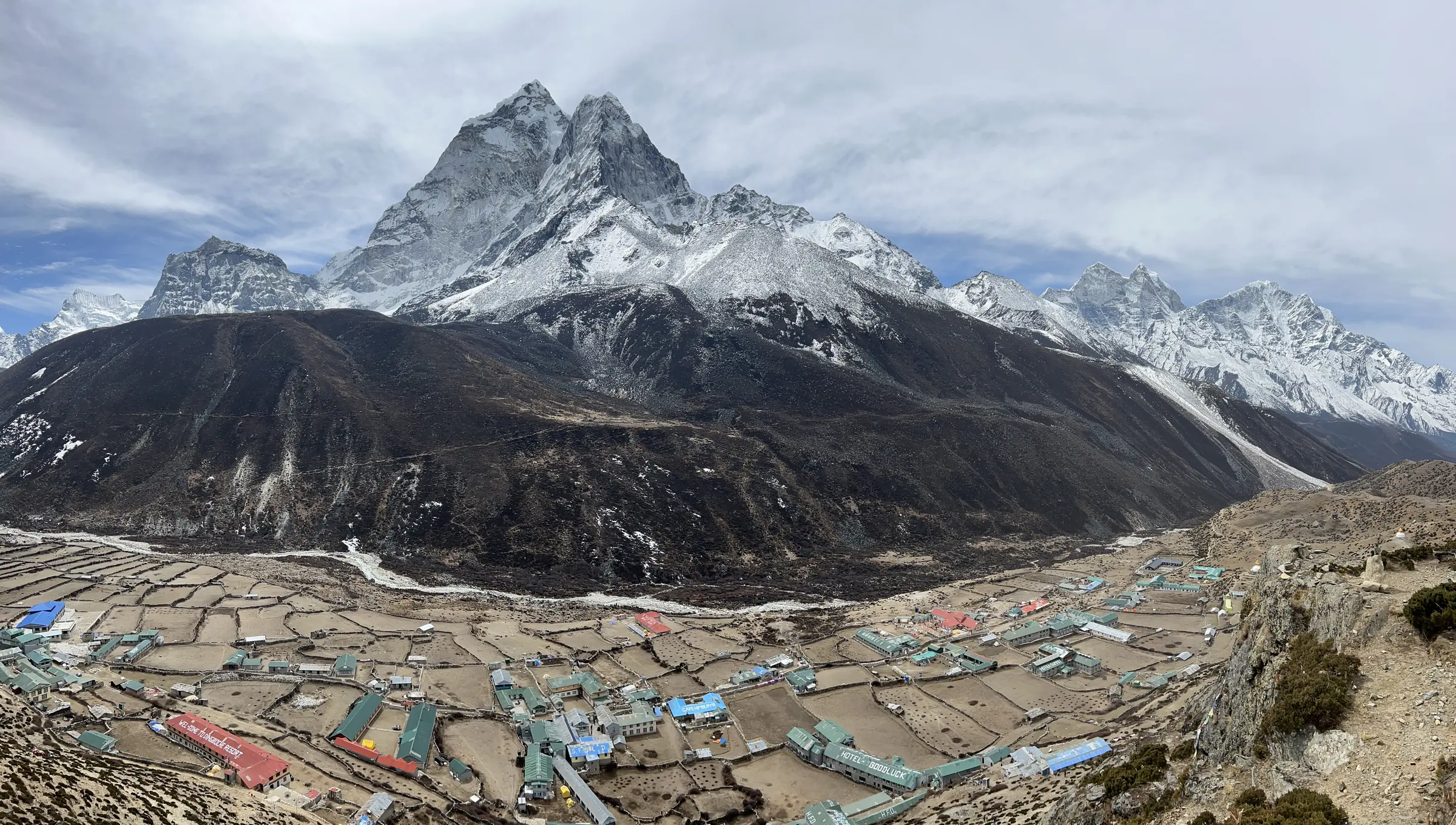
Past Pangboche, home to one of the oldest monasteries in the Khumbu, and up into the Imja valley, where stone walls shelter fields of barley and potatoes from the wind.
- Day8
Acclimatization day in Dingboche
A slow climb up the ridge above the village toward Nangkartshang, with views of Makalu, Lhotse and Island Peak, then back down to sleep at the same height.
- Day9
Dingboche to Lobuche
Along the open slopes above Pheriche, then up to the Thukla Pass, where stone memorials honor climbers and Sherpas who died on Everest. A place to walk quietly.
- Day10
Gorak Shep and Everest Base Camp
Along the edge of the Khumbu Glacier to Gorak Shep, then out over the moraine to Everest Base Camp, beneath the Khumbu Icefall. In spring, expedition tents fill the glacier.
- Day11
Kala Patthar at sunrise, down to Pheriche
An early climb to Kala Patthar for the best view of Everest's summit at first light. Then a long descent to Pheriche, home of the Himalayan Rescue Association's aid post, where the air feels thick again.
- Day12
Pheriche to Namche Bazaar
Back down the valley through Pangboche and past Tengboche, with the peaks now behind you.
- Day13
Namche to Lukla
The last day on the trail, and a farewell evening with your guide and porters.
- Day14
Fly back to Kathmandu
Back to the city, a hot shower and a farewell dinner. The afternoon stays free in case weather delays the morning flight.
- Day15
Departure
Transfer to the airport. Mountain weather sometimes holds the Lukla flights, so many travelers add a spare day before flying home.



Altitude and safety
- Two acclimatization days, at Namche and Dingboche, and the old rule of the mountains: climb high, sleep low.
- Your guide checks on you every morning and evening and knows the signs of altitude sickness: headache, nausea, unusual tiredness, breathlessness at rest.
- If symptoms get worse, we go down. Descending is the best treatment, and the plan always leaves room for it.
- Travel insurance that covers trekking to 6,000 m and helicopter evacuation is essential.
- Drink plenty of water and walk at a pace where you can still talk. Bistarai, bistarai: slowly, slowly.
Respect on the trail
- Walk to the left of mani walls, chortens and prayer stones, and turn prayer wheels clockwise.
- Ask before photographing people, and before taking photos inside a monastery.
- In monasteries, take off your hat (and shoes where asked) and don't point your feet at the altar. A small donation is welcome.
- When yaks or porters pass, step to the uphill side of the trail and let them go by.
- Carry out your trash, especially batteries and plastic. Refill your bottle instead of buying new ones.
- A few words go a long way: Namaste in greeting, Tashi delek among Sherpas, Thuche for thank you.
What's included
This is what we usually include. We confirm every detail for your dates and group in your quote.
Usually included
- Airport pickups and drop-offs in Kathmandu
- Hotel nights in Kathmandu
- Sagarmatha National Park and Khumbu Pasang Lhamu Rural Municipality permits
- Flights between Kathmandu (or Manthali) and Lukla, and the drive to Manthali when needed
- An experienced guide, and porters to carry your main bag
- Teahouse rooms and meals on the trek
- Wages, insurance, food and lodging for your guide and porters
Not included
- International flights and your Nepal visa
- Travel insurance with helicopter evacuation
- Tips for your guide and porters
- Personal trekking gear
- Drinks, hot showers, charging and wifi in teahouses
- Meals in Kathmandu, apart from the farewell dinner
- Extra nights if weather delays a flight
Can I see Everest from base camp?
Not the summit. At base camp the view is filled by Nuptse and the Khumbu Icefall. For Everest itself, the classic view is from Kala Patthar at sunrise, and you'll also see it from above Namche and on the way to Tengboche.
How fit do I need to be?
You'll walk about 5 to 7 hours a day, several days in a row, on rough trails with long climbs. No climbing skills are needed. Regular hiking, or stairs with a loaded pack, in the months before makes a big difference.
Where do flights to Lukla leave from?
In the busy spring and autumn seasons, flights to Lukla usually leave from Manthali airport in Ramechhap, a drive of roughly 4 to 6 hours from Kathmandu, so day 3 starts very early. Outside those months they usually fly from Kathmandu. We arrange the transfer either way.
Can I add Island Peak or the Gokyo Lakes?
Yes. Island Peak (6,189 m) and the Gokyo Lakes with the Cho La both combine well with base camp. Tell us what you'd like and we'll build the route.
When is the best time to go?
March to May and October to November. Spring brings rhododendrons on the lower trail and the expedition season at base camp. Autumn brings the clearest skies, and often the Mani Rimdu festival at Tengboche, which usually falls in October or November.
Related journeys

Everest · Khumbu
Gokyo Lakes & Cho La
Turquoise glacial lakes, the view from Gokyo Ri, and a high glacier pass across to the Everest Base Camp trail.
- Typical
- 15–19 days
- Grade
- Challenging
- Best
- Mar–May, Oct–Nov

Everest · Khumbu
Everest Three Passes
Kongma La, Cho La and Renjo La. The complete circuit of the Khumbu for strong, experienced trekkers.
- Typical
- 18–21 days
- Grade
- Strenuous
- Best
- Mar–May, Oct–Nov

Everest · Khumbu
Island Peak (Imja Tse)
A classic first Himalayan summit, often combined with Everest Base Camp.
- Typical
- 16–20 days
- Grade
- Strenuous
- Best
- Apr–May, Oct–Nov

Plan your Everest Base Camp trek
Tell us your dates and group. Jangbu or Pasang will reply personally with a route and price.